
( History & Heritage )
A small country with a long story
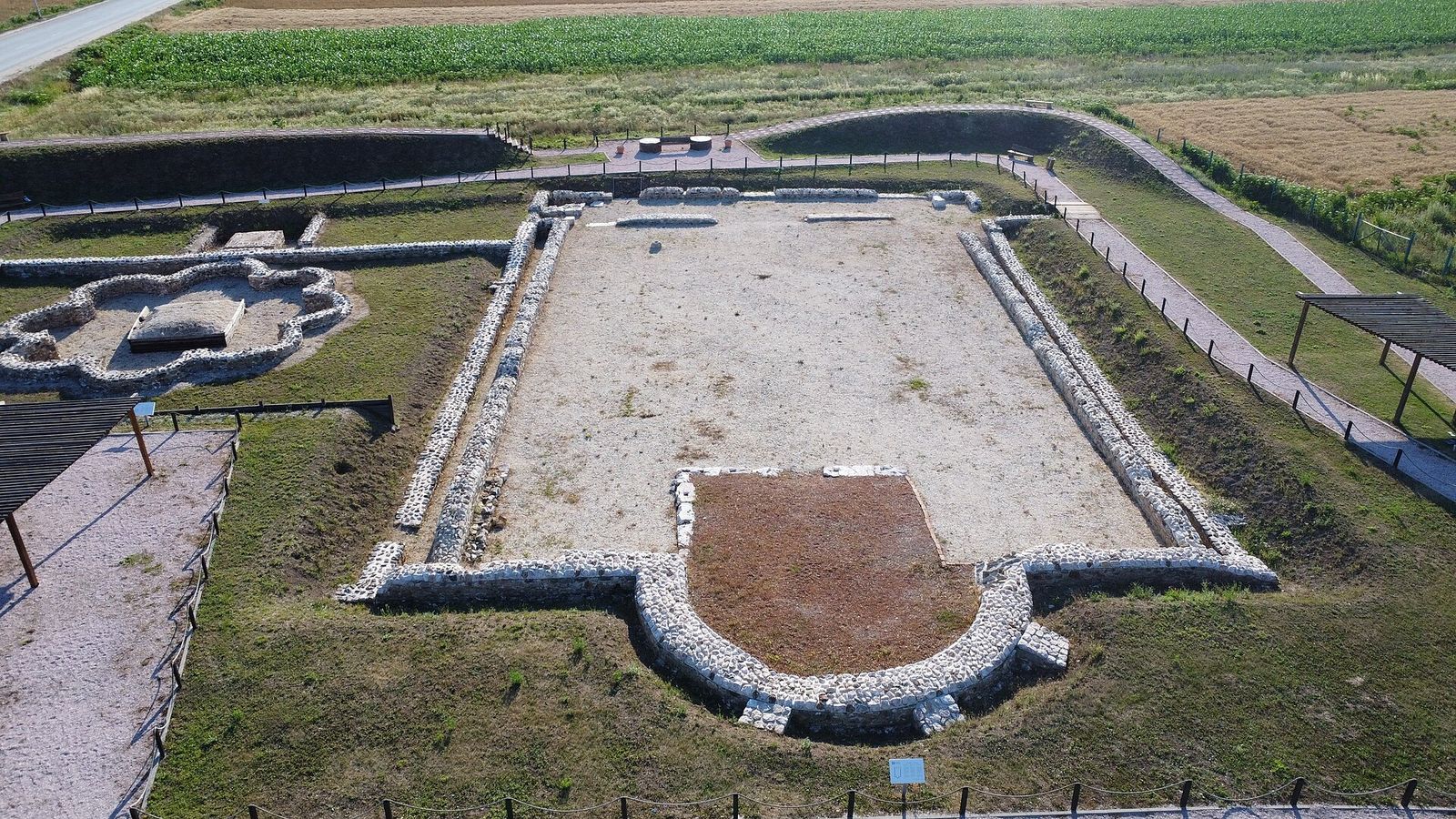
Ulpiana, near Prishtina
Kosovo may be small on the map, but its story stretches across thousands of years.
Beneath its mountains, fields and cities lie layers of human history: prehistoric settlements, ancient Dardania, Roman cities, Byzantine and medieval monuments, Ottoman-era bazaars, Albanian traditions, and a young republic still writing its own story.
But Kosovo's heritage isn't only found in archaeological sites and old buildings. It lives in language. In food. In music. In embroidery and traditional dress. In the way coffee is served. In the way a family welcomes a stranger to the table.
Some heritage is preserved in museums. Some of it is still being lived every day. Welcome to the story behind the landscape.
01 — Before modern borders
Before Kosovo had its modern name
Long before today's borders existed, people were already living, farming, trading and building communities across this territory.
The archaeological record reaches deep into prehistory, with evidence of settlement and cultural development stretching back thousands of years. Kosovo's cultural heritage institutions describe that record as representing more than eight thousand years of human experience, from prehistory to the present.
Among the most important ancient peoples associated with this region were the Dardanians. Dardania occupied a central position in the Balkans, with its heartland corresponding broadly to the territory of today's Kosovo. Archaeological research has documented settlements, fortifications, burial sites, inscriptions and material culture associated with it.
The Dardanians are commonly discussed within the wider history of the ancient Illyrian world, although the precise relationships between ancient peoples, their cultures and later populations remain active subjects of scholarly research. The relationship between ancient Illyrian peoples and modern Albanians is itself an important field of historical and linguistic study rather than a settled question.
What we can see clearly is this: this land held organised communities, trade, belief and cultural life long before the modern map of Europe existed.
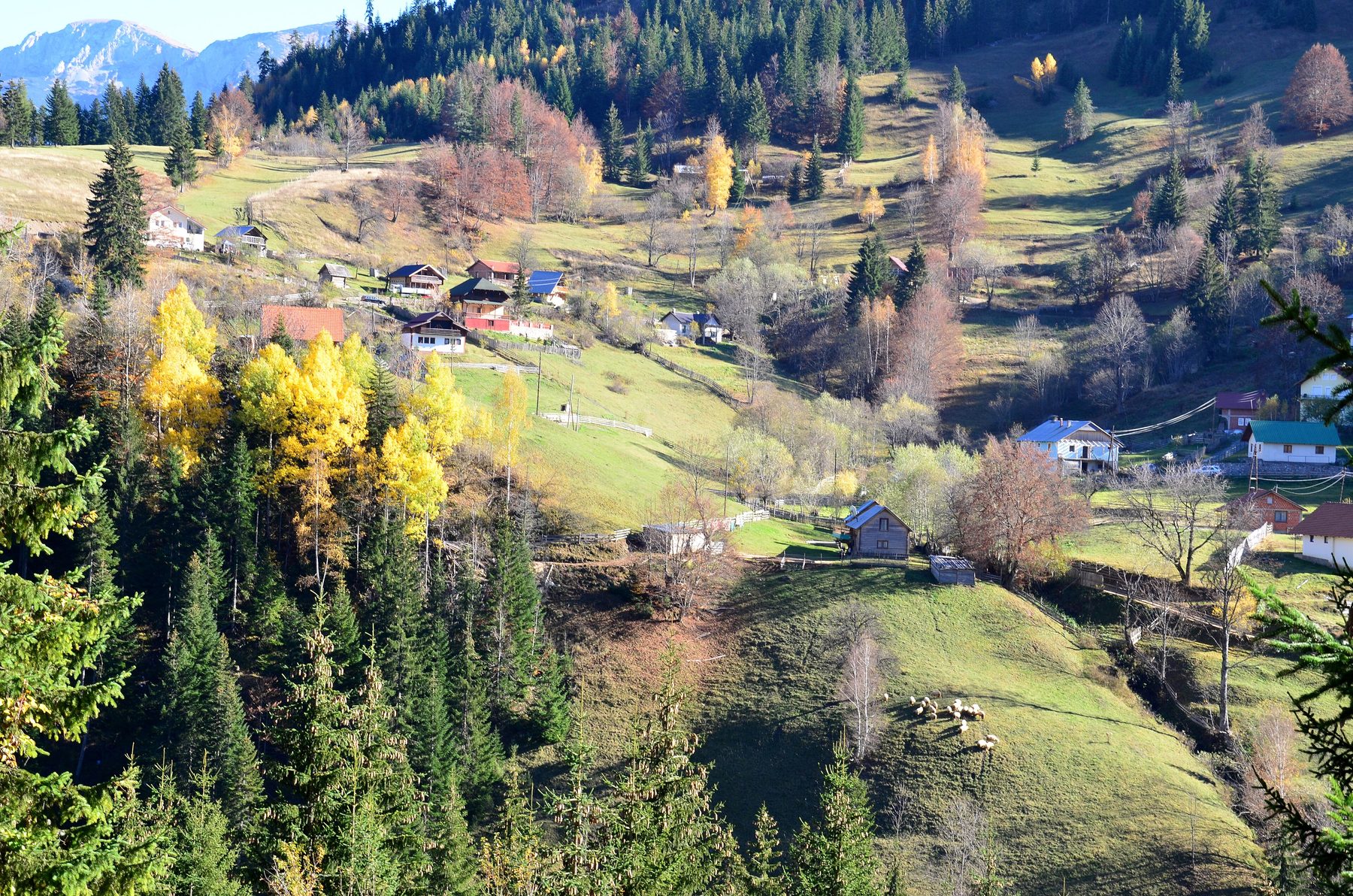
The Rugova valley — a landscape inhabited long before it had a modern name.
Bujar Imer Gashi, CC BY-SA 3.0 · Wikimedia Commons
02 — Dardania
A land known to the ancient world
The name Dardania appears in ancient historical and geographical sources, attached to a strategically important part of the central Balkans.
Dardanian settlements were connected to wider networks of exchange across the region. Communities here worked metals, cultivated the land, traded, built fortified settlements and developed their own religious and cultural practices, interacting continuously with the peoples and civilisations around them.
The story of Dardania is not a story of isolation. It is a story of connection. The region stood between major routes linking the interior Balkans, the Adriatic and the Aegean worlds — a place where cultures met, exchanged ideas, and sometimes competed for control.
Archaeological research continues today. Every excavation adds another piece to the story.
03 — Ulpiana
A Roman city at the heart of Dardania
Just outside modern Prishtina lies one of Kosovo's most extraordinary archaeological sites.
Ulpiana developed from an earlier Dardanian settlement into an important Roman urban centre. Its remains include streets, public buildings, water systems, fortifications, a basilica and evidence of religious life, with a period of notable prosperity during the third and fourth centuries.
The city was rebuilt in the sixth century during the reign of Emperor Justinian I, when it was known as Justiniana Secunda. It is not simply a "Byzantine city": the site holds Roman and Late Antique/Byzantine-period layers stacked on much older foundations.
Walk through Ulpiana today and you are not only looking at stones. You are standing where different worlds met — Dardania, Rome, Late Antiquity, early Christianity, the Byzantine world. And the excavation is still telling us more.
Before Rome
A Dardanian settlement on a strategically placed plain.
Roman period
Growth into an urban centre with streets, water systems and public buildings; prosperity in the 3rd–4th centuries.
Late Antiquity
Christian religious architecture, including a basilica; rebuilding under Justinian I in the 6th century as Justiniana Secunda.
Today
An active archaeological site near Prishtina, where excavation continues to revise what is known.
Ulpiana — Roman and Late Antique layers on a Dardanian foundation.
Arianit, CC BY-SA 4.0 · Wikimedia Commons
04 — Crossroads
Where civilisations met
Geography has always mattered here.
Kosovo sits in the centre of the Balkan Peninsula, between routes connecting the Adriatic region with the interior Balkans and the Aegean world. That position made the territory valuable to many different states and civilisations across history.
Roman rule transformed the region. Late Antiquity brought political, religious and social change, and Christianity left architectural and artistic traces. Medieval states — including medieval Serbian states, whose monasteries still stand — added their own monuments. The Ottoman period introduced new architecture, trade, urban life and cuisine. Albanian cultural traditions continued to develop alongside the many communities living across the region, and the twentieth century added its own difficult chapters.
The result is not one single story. It is a layered one. A mosque beside a church. A Roman road beneath a modern field. A medieval stone bridge leading into an Ottoman-era bazaar. A household cooking the way it was taught two generations ago.
In Kosovo, history is rarely far from the present.
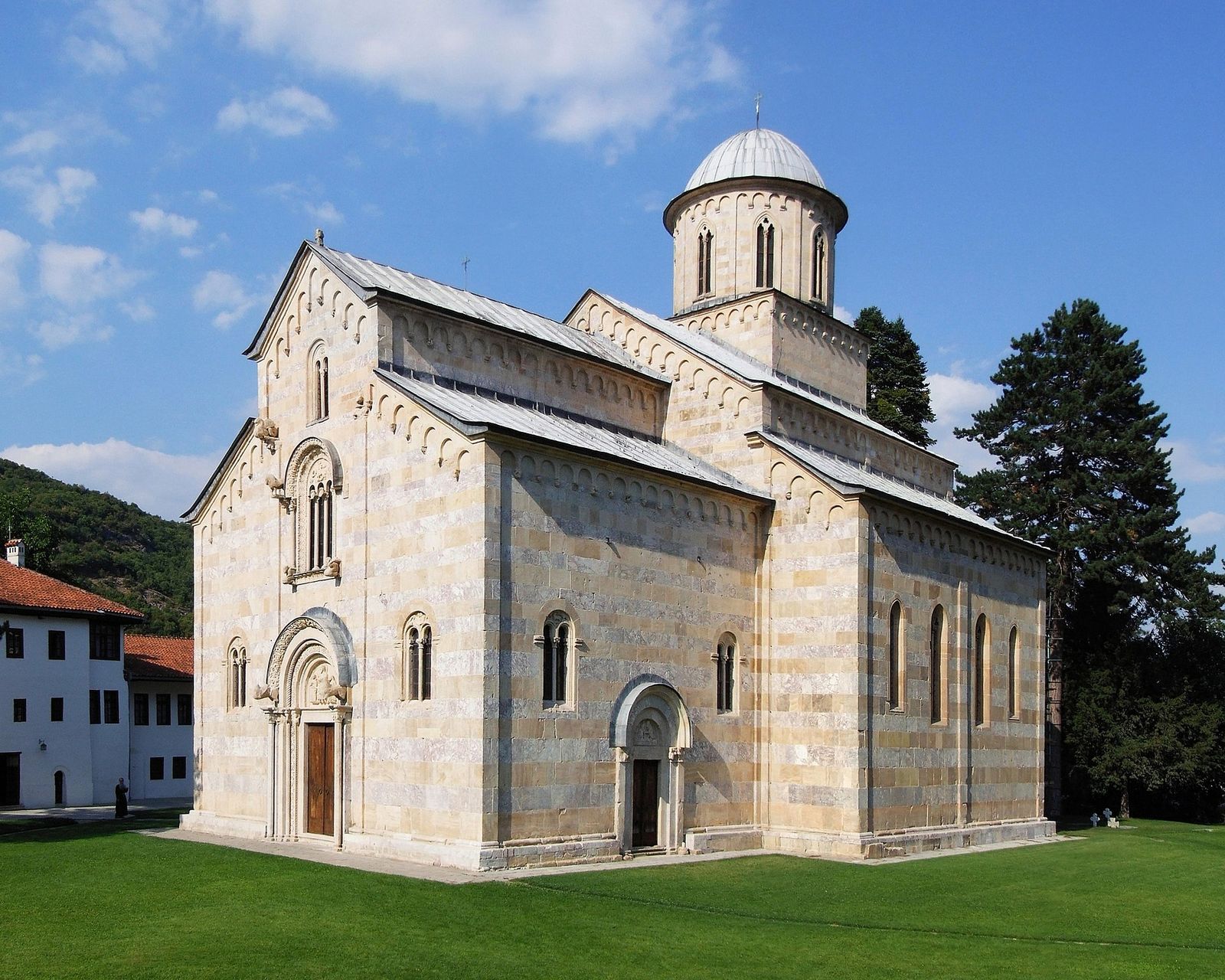
Visoki Dečani, a fourteenth-century monastery in western Kosovo and part of the UNESCO World Heritage listing for medieval monuments in Kosovo.
Pudelek (Marcin Szala), CC BY-SA 3.0 · Wikimedia Commons
05 — Living heritage
Some traditions are not kept in museums
Heritage is more than ruins. It is what people continue to do.
In Kosovo, cultural knowledge has traditionally been carried through families and communities: through language, food, music, clothing, weddings and celebrations, craftsmanship, storytelling and hospitality.
Traditional clothing can carry regional identity in its colours, embroidery, patterns and forms. Music preserves stories that were never written down. Recipes become family memory. Craftsmanship is taught by watching someone older. Children learn traditions not from a textbook but simply by being there.
That is what makes living heritage powerful. It changes with every generation while still carrying traces of the generations before it.
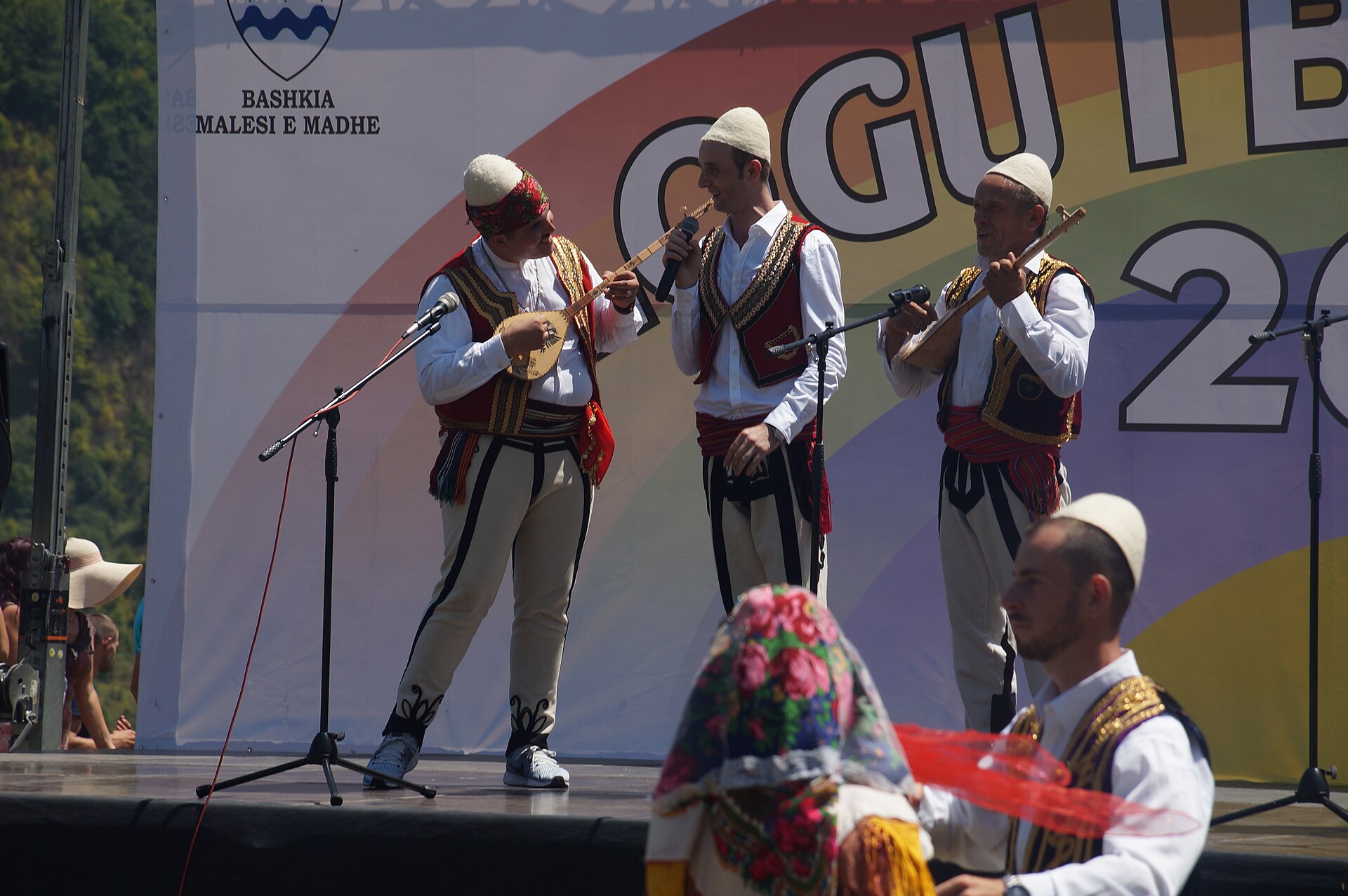
Traditional dress and folk instruments at a highland cultural gathering — heritage practised rather than displayed.
Albinfo, CC BY-SA 4.0 · Wikimedia Commons
Heritage isn't only something we inherit.
It is something we choose to carry forward.
06 — Language
A language that survived
Albanian forms its own branch of the Indo-European language family — separate from the Romance, Slavic, Germanic and Greek branches.
It is one of Europe's oldest documented living language traditions, and its precise origins and early development remain an important subject of linguistic scholarship rather than a closed question.
The language has two major traditional dialect groups: Gheg in the north and Tosk in the south. The Albanian traditionally spoken in Kosovo belongs predominantly to the Gheg area, while the standard written language draws heavily on Tosk.
For generations, language has been one of the strongest carriers of cultural identity here. It carried family stories, songs, names and traditions, and it connected generations through periods when formal education in Albanian faced restrictions.
Today Albanian is spoken by millions of people across the Balkans and throughout a global diaspora.
A language survives not simply because it is written.
It survives because people keep speaking it to one another.
07 — Symbols
Symbols we carry
Look closely at traditional art here and you will often find recurring geometric and solar-inspired motifs.
Sun imagery has a documented place in the ancient material culture of the region, and archaeological scholarship has examined solar symbolism in Dardanian and Illyrian contexts. Centuries later, geometric patterns, embroidery and symbolic motifs continued to appear in traditional clothing, decorative arts and everyday objects.
It would be wrong to claim that every modern symbol is a direct survival from antiquity. Cultures change. Symbols change. Meanings change. But some motifs appear to have travelled across centuries, shifting in meaning while remaining recognisable.
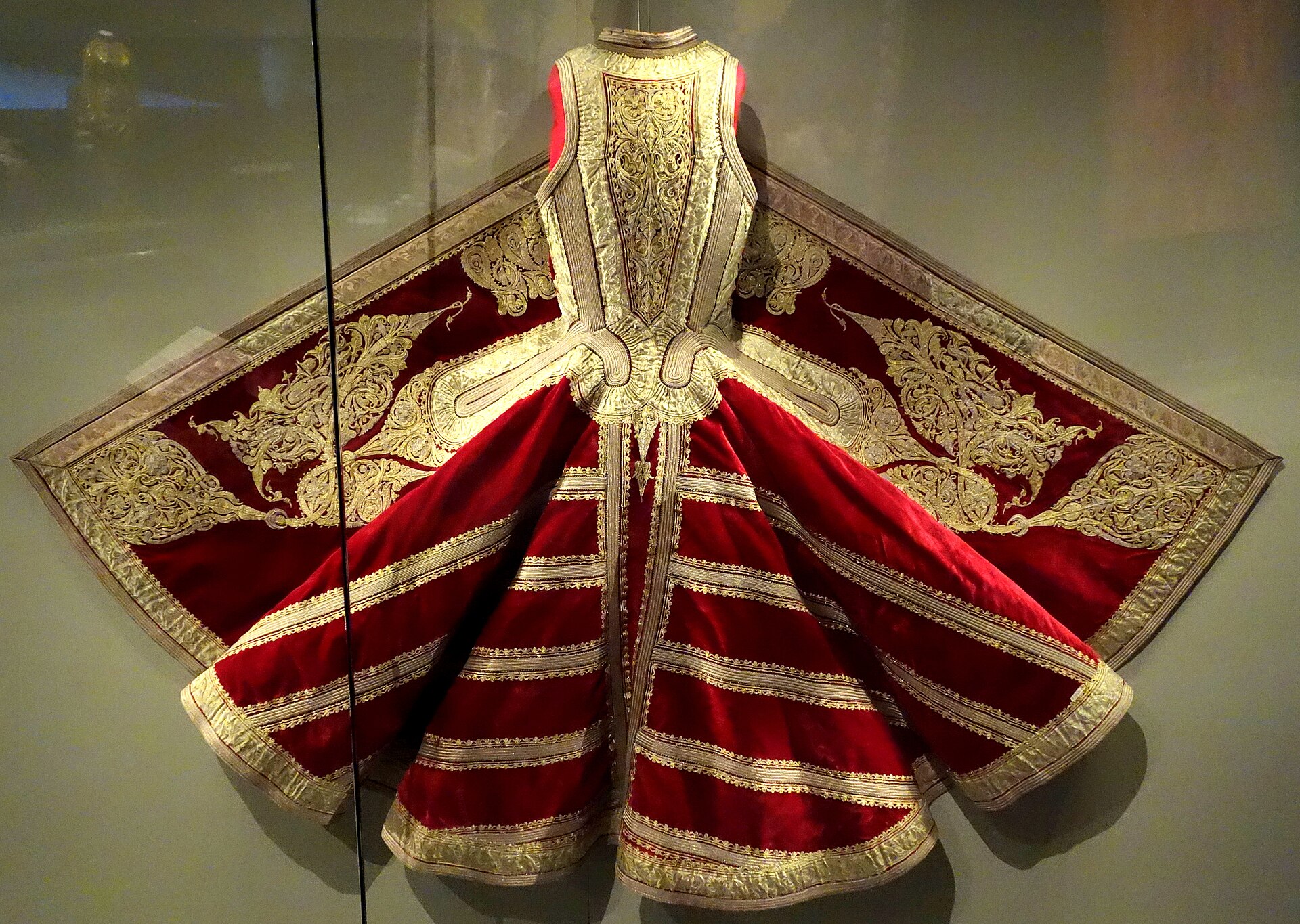
A mid-nineteenth-century Albanian sleeveless jacket in silk with gold and silver embroidery — the visual language of pattern, worn.
Daderot, CC0 · Royal Ontario Museum via Wikimedia Commons
The pattern changes.
The memory remains.
08 — Flija
Flija — a tradition made slowly
There are some foods that are more than food.
Made from layers of batter cooked slowly beneath a saç — a metal dome buried in embers — flija is strongly associated with Kosovo and with Albanian culinary culture more widely.
Its preparation takes patience. Layer after layer, fire, time, attention, and often several people around the same table. That is part of what makes it what it is: food prepared not simply for eating but for sharing — for family, for guests, for celebrations, for long conversations.
You will sometimes hear that flija's rings were created in antiquity to preserve an Illyrian sun symbol. That is a cultural interpretation rather than established historical fact. What can be said is that across Albanian visual culture the sun has long carried associations with life, light and protection, and that traditional patterns and foods still connect families to older cultural memory.
Food can carry memory. Every generation that learns to make flija keeps part of it alive.
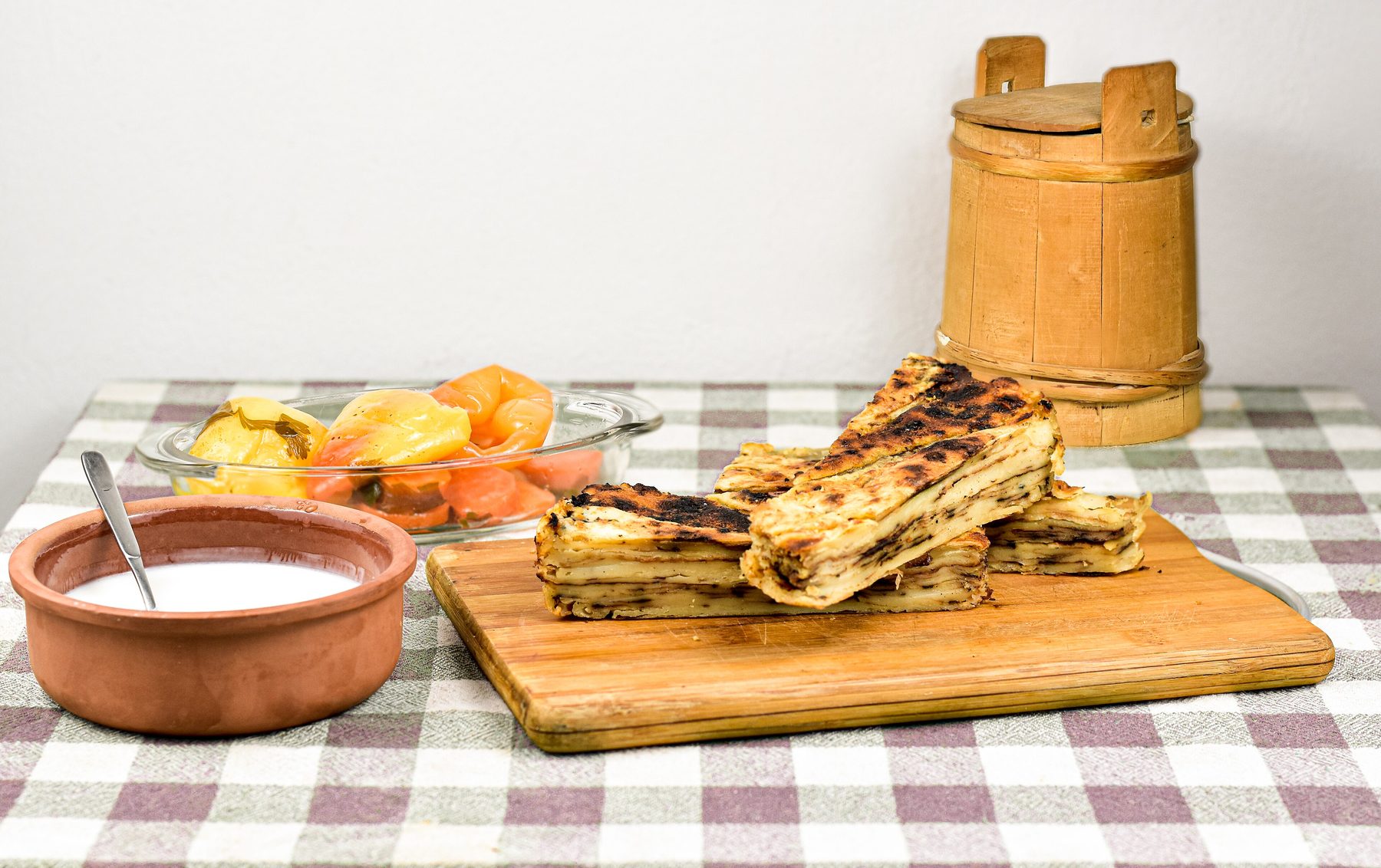
Flija — layer after layer, several hours, usually several pairs of hands.
Rrahmani.v, CC BY-SA 4.0 · Wikimedia Commons
09 — Gadime cave
Millions of years beneath our feet
Some of Kosovo's oldest stories aren't written in books. They're written in stone.
Near the village of Gadime, south of Prishtina, lies one of Kosovo's most remarkable natural formations: Gadime Cave, also known as the Marble Cave. It is a karst cave formed within marble limestone, shaped by water and geological processes over immense spans of time — the rock and its formation are described in geological terms of many millions of years.
The cave itself was found in modern times in 1966, when a villager working on his land broke through into it. It opened to visitors in the following years and is today a protected natural monument.
Those are two entirely different timescales, and it is worth keeping them apart: the geology is ancient, the discovery is recent, and the visiting is newer still.
Inside are corridors, chambers and crystalline aragonite formations, including the rare curving strands the cave is known for.
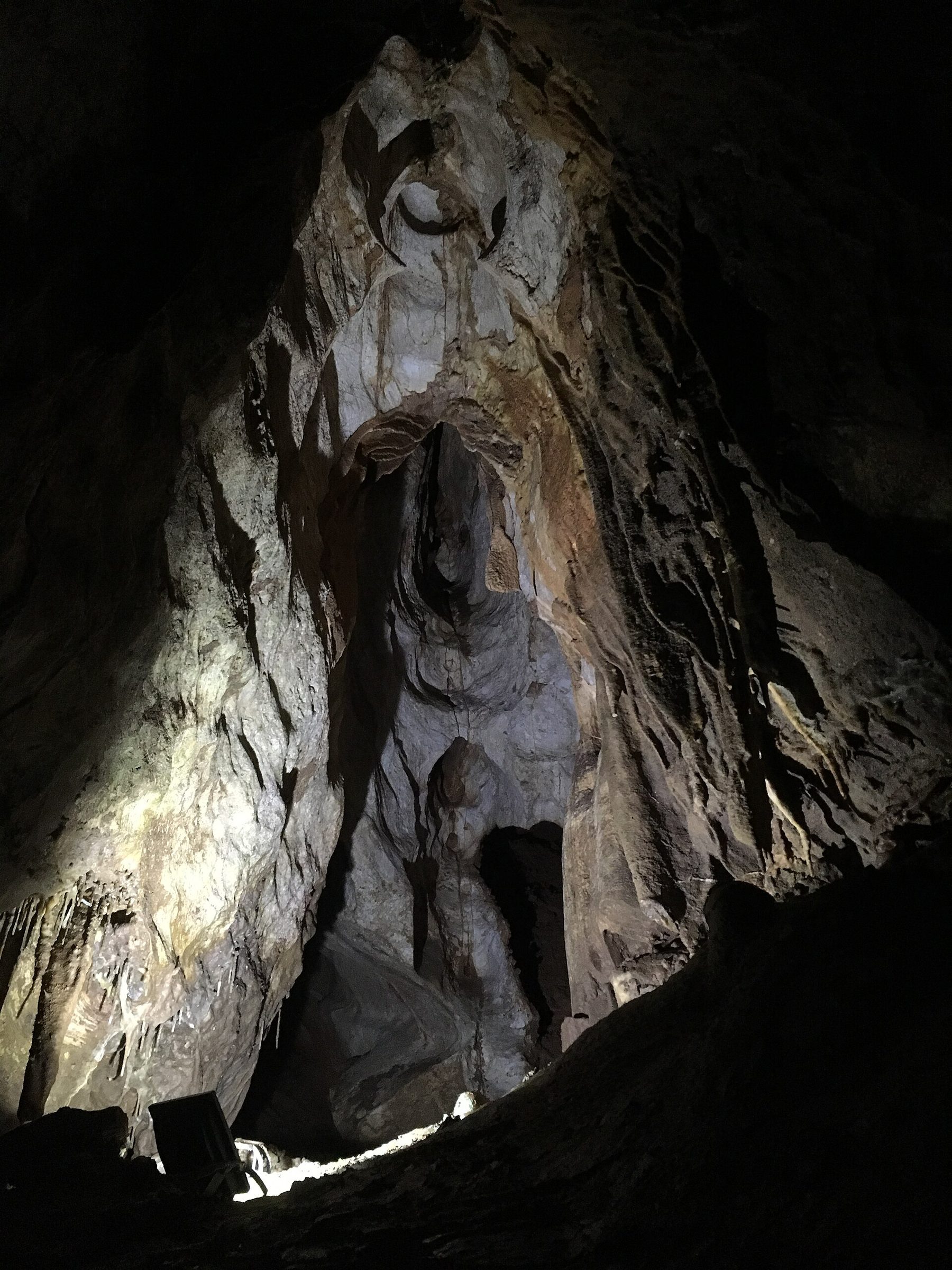
Gadime Cave — karst chambers and rare aragonite formations beneath a quiet village.
Antonio Pavlovski, CC BY-SA 4.0 · Wikimedia Commons
Human history is measured in generations.
Geological history is measured in millions of years.
10 — Cities
Cities that remember
Some of Kosovo's history is easiest to understand by simply walking through its cities.
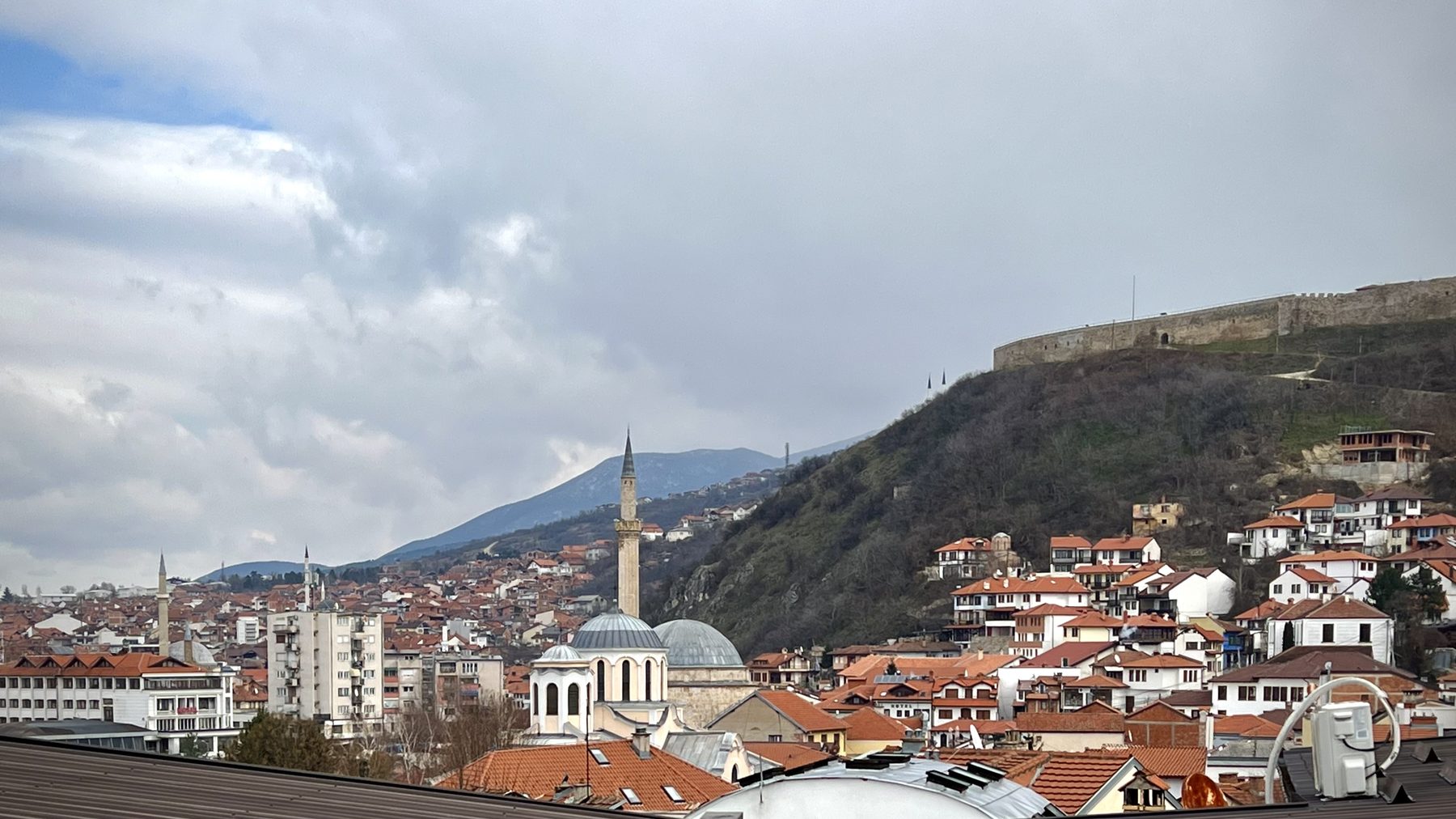
Prizren
Kosovo's most atmospheric historic city. Stone streets, an Ottoman-era bridge, bazaars, mosques, churches and a fortress above it all, with the Sharr mountains close behind. Here history isn't behind glass — it is the street you are standing on.
Sharon Hahn Darlin, CC BY 2.0 · Wikimedia Commons
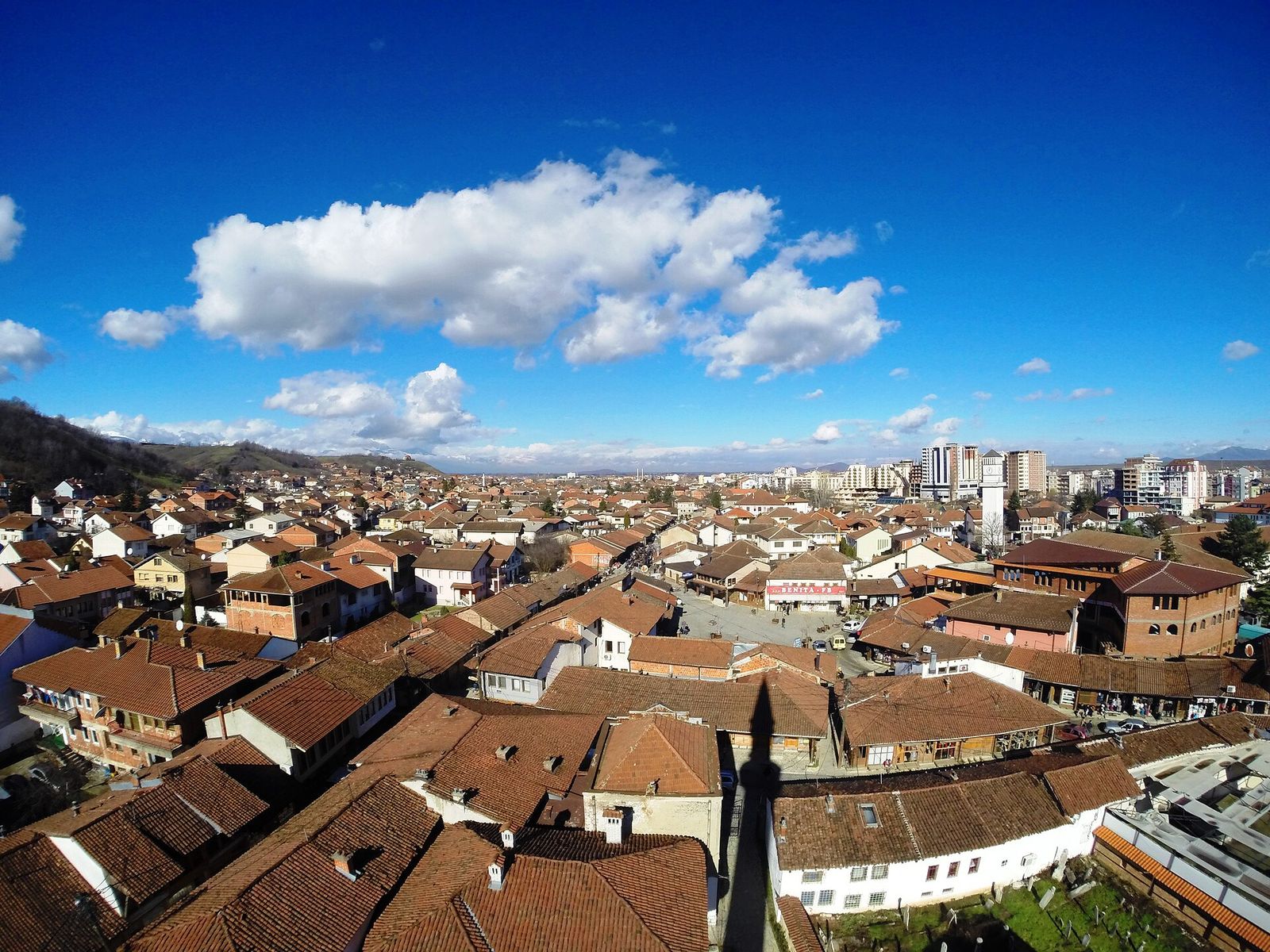
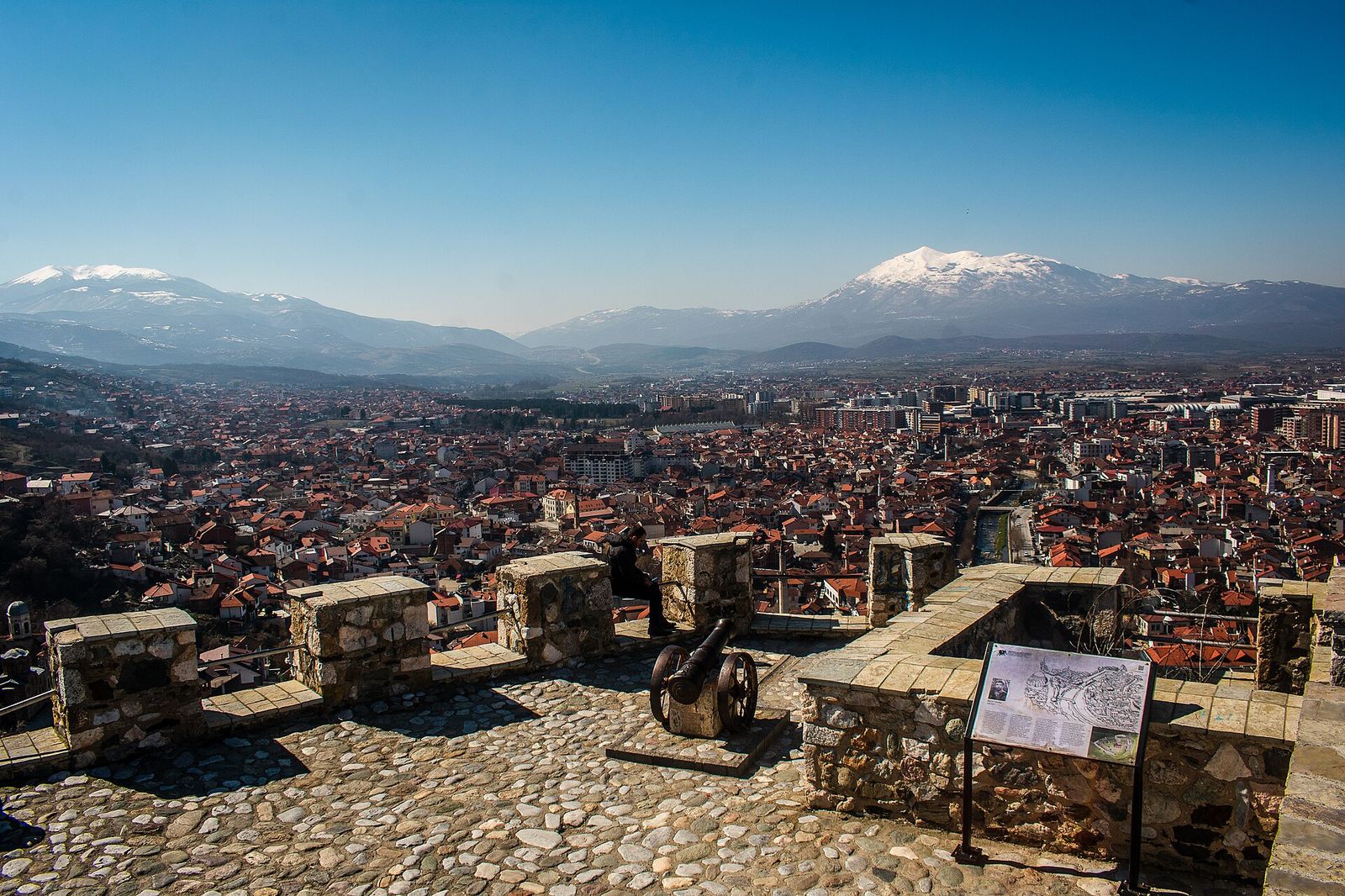
Gjakova
Çarshia e Madhe, the Grand Bazaar, is one of the oldest bazaars in the region and still the heart of the city — a record of commerce, craftsmanship and urban life written in timber and stone rather than in books.
Nentor Oseku, CC BY-SA 3.0 · Wikimedia Commons
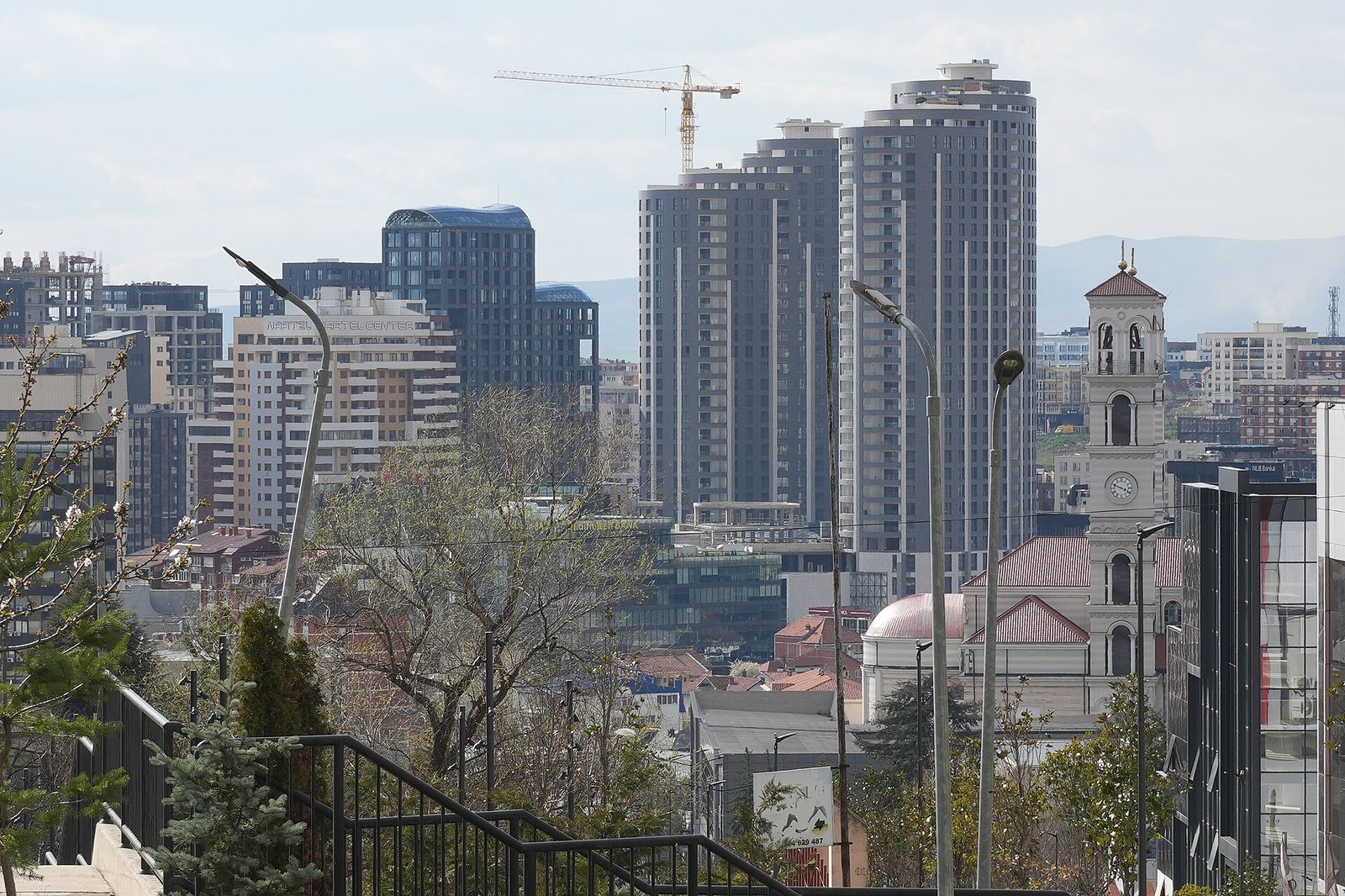
Peja
At the foot of the mountains, Peja has long been the gateway between town life and the Rugova landscape — a city tied to trade, religious heritage and the mountain communities above it.
Tom.whitehead337, CC BY-SA 4.0 · Wikimedia Commons
Prishtina
Ancient in its surroundings — Ulpiana lies just outside it — and unmistakably young in its energy. Cafés, universities, music, art, fashion and start-ups make a contemporary city culture that sits directly on top of an archaeological one.
GentiBehramaj, CC BY 4.0 · Wikimedia Commons
This is Kosovo's character in miniature:
old roots, young energy.
11 — Memory
The people who became part of the story
Every culture remembers its history through people.
For Albanians, few historical figures carry more symbolic weight than Gjergj Kastrioti — Skanderbeg. A fifteenth-century nobleman and military leader, he led a prolonged resistance to Ottoman expansion in the Albanian lands and became a central figure in Albanian historical memory, commemorated in monuments across the region including in Prishtina.
Centuries later, Kosovo's modern history produced another figure whose name is inseparable from it: Adem Jashari, a commander of the Kosovo Liberation Army who was killed alongside members of his family in Prekaz in 1998, during the conflict that preceded the Kosovo War. He remains one of the most prominent figures in Kosovo's collective memory.
These are very different periods and very different figures. What they show is something universal: people remember history through human beings — through names, stories, songs, monuments, and the things families tell their children.
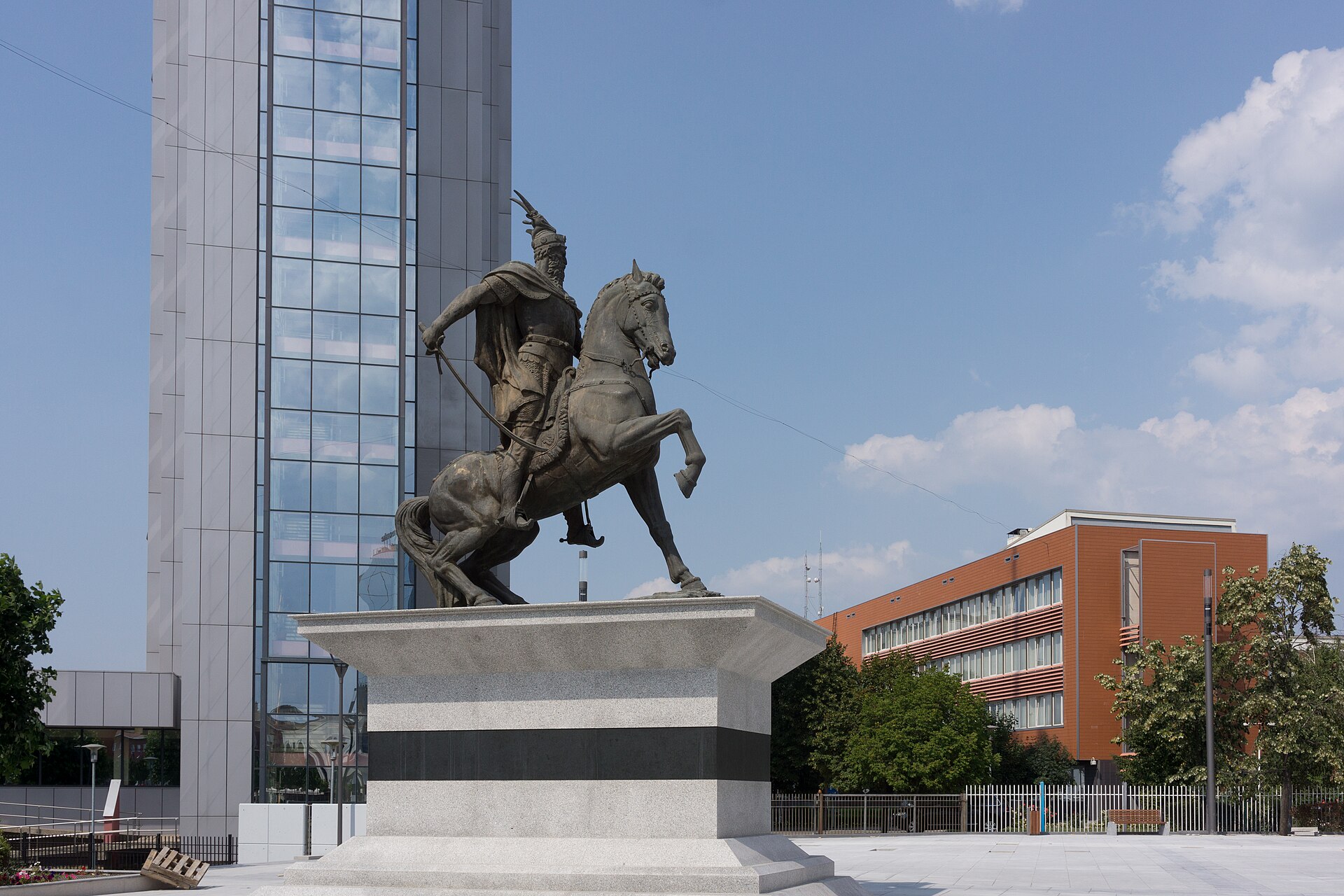
Gjergj Kastrioti Skanderbeg, in the square that carries his name in Prishtina.
Fanny Schertzer, CC BY-SA 3.0 · Wikimedia Commons
12 — Modern Kosovo
The youngest chapter
Kosovo declared independence on 17 February 2008. That is only one chapter of its modern story.
Kosovo has one of Europe's youngest populations, and a generation growing up connected to both a homeland and a large global diaspora. Prishtina's cafés are full of conversations. Young entrepreneurs are building businesses. A technology and creative sector is visibly growing, alongside design, fashion and food.
Its cultural reach is far larger than its size. Dua Lipa was born in London to Kosovo Albanian parents and holds Kosovan citizenship; Rita Ora was born in Prishtina and raised in London; Era Istrefi is a Kosovo-born singer who reached international audiences. In sport, judoka Majlinda Kelmendi won Kosovo's first Olympic gold medal at Rio 2016, and Distria Krasniqi took gold at Tokyo 2020 — both Kosovo-born athletes competing for Kosovo.
Kosovo's story is therefore not only about what came before. It is also about what is being made right now.
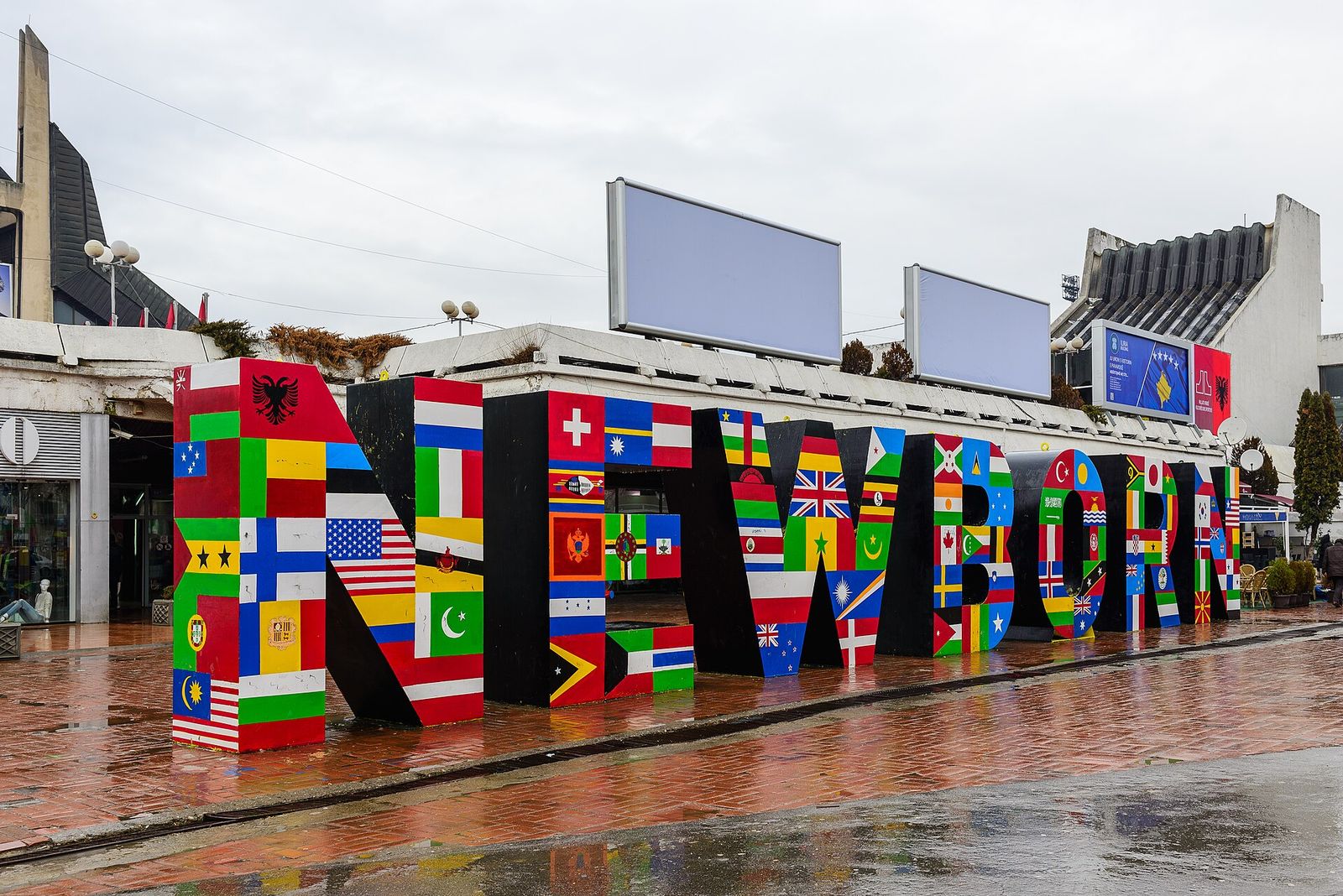
NEWBORN, Prishtina — repainted every year since 2008.
Arild Vågen, CC BY-SA 3.0 · Wikimedia Commons
Ancient roots.
Young energy.
A future still being written.
13 — The coffee table
Where conversations begin
There is a reason you will see so many cafés here.
Coffee is not simply a drink in Kosovo. It is a social ritual: a reason to meet, a reason to stay, a place to talk about work, family, politics, dreams and absolutely nothing at all. A macchiato can become an hour. An hour can become an afternoon. Sometimes a stranger at the next table becomes the person who tells you exactly where you must go tomorrow.
This is part of discovering Kosovo. The best way to understand a place is rarely to rush through its landmarks.
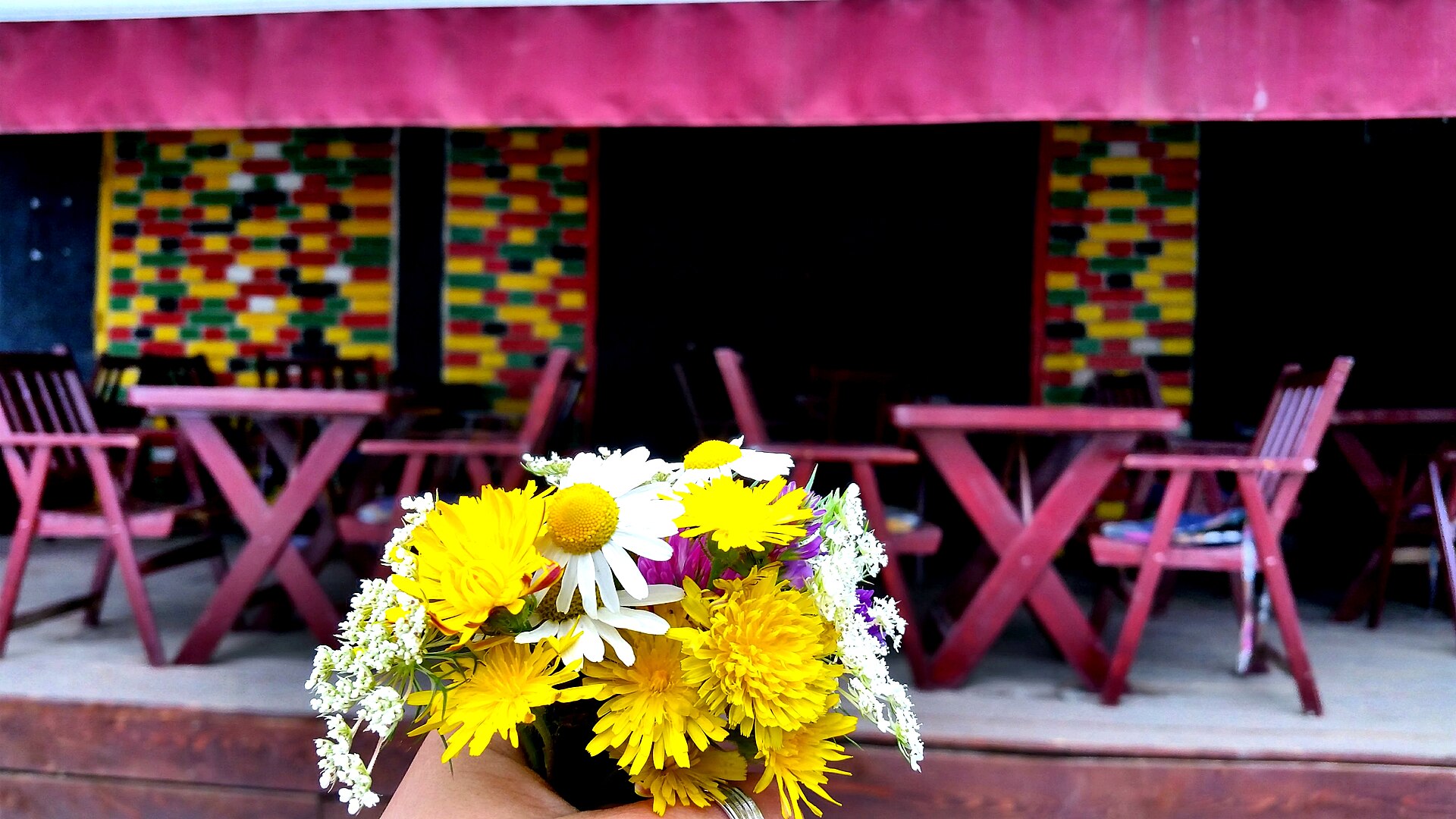
Prishtina's café streets — the country's real meeting rooms.
Rov1, CC BY-SA 4.0 · Wikimedia Commons
Sometimes discovering a country means sitting down long enough
to let someone tell you their story.
14 — Hospitality
Come as a guest. Leave feeling at home.
A guest here is not simply someone who has arrived at your door.
A guest is someone you take care of. You offer coffee. You offer food. You ask where they came from and where they are going. You make sure they have everything they need. And you usually insist they eat one more time before leaving.
This tradition runs deep in Albanian social life and is closely tied to ideas of generosity, honour and the standing of the guest. Not every family expresses it in the same way — but as a cultural value it is held very seriously.
It is one reason FRID feels personal. We don't want you to meet Kosovo through a hotel window or a tour bus. We want you to meet the people, the table, the stories, the laughter, the landscape — and the feeling of being welcomed a long way from home.
In an Albanian home, you are not simply a guest.
You are welcomed, cared for and honoured.
15 — Still being written
The story is still being written
You can come to Kosovo for the mountains. For Rugova. For Prizren. For the food.
But eventually something changes. You stop seeing Kosovo only as a destination, and you start seeing the layers.
The ancient settlement beneath a modern field. The language spoken by someone whose grandparents spoke it before them. The recipe prepared exactly as it was taught. The embroidery carrying patterns older than the person wearing them. The café full of young people planning futures in a country still writing its own.
And suddenly the landscape means something more.
FRID was created to help you experience both.
Because every place has a view.
But not every place has a story like this.
Come for the landscape. Stay for the story.
Kosovo is not only a story from the past. It is a story still being written — and the best way to read it is slowly, at a table, with someone who lives here.
Photography on this page is real, licensed imagery of Kosovo, credited beneath each image and used under the Creative Commons or public-domain terms stated. Where historical questions are debated — the relationship between ancient Illyrian peoples and modern populations, the origins of the Albanian language, the symbolism of traditional patterns — this page says so rather than presenting one interpretation as settled fact.